Job Cost Reporting Services: A 2026 Financial Guide
Discover how job cost reporting services provide real-time insights into project expenses and enhance financial decisions. Explore key features now!


TL;DR:
- Effective job cost reporting provides real-time project expense visibility with standardized codes, rapid data integration, and weekly updates. Organizational discipline, including alignment meetings and weekly reviews, outweighs software features in ensuring reliable financial control. Accurate, timely data relies on proper setup, field-to-finance communication, and calibrated implementation periods of 30 to 60 days.
Job cost reporting services are the systems and workflows that give financial managers real-time visibility into project expenses, variance trends, and forward-looking cost estimates. Without them, project budgets drift silently until the damage is irreversible. The most effective services combine a standardized cost code structure of 20–40 unique codes, near-real-time ERP integration, and weekly reporting cycles that turn raw cost data into decisions. Northstar Financial Advisory, The Construction CFO, and Profit.co all point to the same conclusion: job costing is an organizational discipline first and a software problem second.
1. What are the key features of job cost reporting services?
Effective job cost reporting services share a specific set of capabilities. Miss one, and the entire reporting chain breaks down.

Standardized cost code structure. A 20–40 code framework covering labor, materials, subcontractors, equipment, and overhead is the baseline for meaningful analysis. Frameworks like CSI MasterFormat give teams a consistent vocabulary for bid-to-actual variance comparisons across every project.
Near-real-time ERP integration. Uninvoiced committed spend never appears in standard accounts payable reports. That gap creates hidden financial exposure that only surfaces when it is too late to act. Bidirectional data flow between your ERP and project management platform closes that gap.
Weekly reporting cadence. Monthly reporting leaves project managers reviewing data that is 2–3 weeks old. Weekly cost entry cycles transform job costing from a historical record into an early warning system.
Variance and forward-looking reports. Cost-to-date reports tell you where you have been. Estimate-at-completion and cost-to-complete reports tell you where you are heading. Both are required for real project financial management.
Audit trails and commitment tracking. Every purchase order, subcontract, and change order must be visible before the invoice arrives. Automated audit trails support dispute resolution and give finance teams a complete picture of financial commitments at any point in time.
Pro Tip: Build your cost code list before you configure your accounting system. Retrofitting codes after project data is already entered creates reconciliation problems that can take months to untangle.
2. Which workflows drive better financial control?
The right workflow turns a reporting tool into a control system. These five steps define the operational standard.
-
Run an alignment meeting before project start. Misalignment between estimator budgets and accounting cost codes is the most common reason job costing setups fail. A mandatory pre-project meeting between the estimator and the accountant maps every estimate line to a cost code. Without it, bid-to-actual variance analysis is impossible.
-
Enter costs weekly, not monthly. Labor, materials, equipment, and subcontract costs should be entered on a weekly cycle coordinated with payroll and procurement cutoffs. This keeps the data current and prevents the 2–3 week lag that hides margin problems.
-
Hold weekly cost-to-complete reviews. Project managers update their cost-to-complete estimates every week based on current field reality. Weekly review sessions surface change order opportunities and flag slow-pay or schedule risks before they compound.
-
Run monthly cross-department alignment meetings. Finance, field operations, and management review WIP schedules, change order logs, and productivity variances together. This meeting catches the issues that weekly reports flag but no single team can resolve alone.
-
Use automated dashboards and exception alerts. Exception-based reporting pushes alerts when a cost code exceeds its budget threshold. Finance teams stop hunting for problems and start responding to them.
Pro Tip: Assign one person to own the weekly cost entry deadline. When accountability is shared across a team, entries slip and the reporting cycle breaks within two months.
3. How do job cost reporting services integrate with existing financial systems?
Integration quality determines whether your cost data is trustworthy or merely approximate.
Bidirectional API connections between ERP and project portfolio management platforms enable live financial data synchronization. When a purchase order is approved in the project system, the committed cost appears immediately in the ERP. That single capability eliminates the manual consolidation step that consumes hours of finance team time every week.
Master data management is the hidden requirement most implementations underestimate. Cost codes must match exactly across every connected system. A single naming inconsistency, such as “Labor-Framing” in one system and “Framing-Labor” in another, breaks automated matching and forces manual reconciliation. Establish a master code list and enforce it as a system configuration rule, not a best practice.
Committed cost visibility is the feature that separates capable platforms from basic ones. Costs become visible as soon as they are committed, removing manual consolidation delays entirely. This matters most for subcontract-heavy projects where the gap between commitment and invoice can span weeks.
A unified platform outperforms a loosely connected stack in one specific way: exception management. When invoice data, purchase order data, and cost code data all live in the same environment, disputes are resolved with a single lookup. Across disconnected systems, the same lookup requires three separate queries and a spreadsheet. DocuPOW’s procure-to-pay automation addresses exactly this problem by connecting document extraction directly to cost tracking workflows.
Pro Tip: Before selecting any integration approach, map every data handoff point between your estimating, project management, and accounting systems. Gaps in that map are where financial exposure hides.
4. What are the common pitfalls in job cost reporting services?
Most job costing failures are organizational, not technical. The software works. The process around it does not.
-
Skipping the alignment meeting. Without a pre-project alignment session, estimators and bookkeepers use different cost categories. The result is a variance report that compares incompatible numbers. This single omission makes the entire reporting setup unusable.
-
Staying on a monthly reporting cycle. Monthly reports arrive too late to change outcomes. By the time a cost overrun appears in a monthly report, the work causing it is already complete. Weekly cycles give project managers time to act.
-
Ignoring the field-to-finance gap. Financial reporting lags when field-level insights are not translated into financial terms promptly. A foreman knows a concrete pour ran 15% over budget on day three. That information takes weeks to reach finance under a manual reporting model.
-
Underestimating the setup timeline. Reliable reports typically require 30–60 days of calibration after implementation. Finance teams that expect accurate data on day one make decisions on incomplete information during that window.
-
Neglecting variance documentation. When a cost code exceeds its budget, someone must document why. Without structured variance notes, the same overrun repeats on the next project because no one captured the lesson.
“Most businesses fail to recognize job costing as an organizational discipline requiring alignment, training, and structured communication. Proper setup and calibration typically take 30–60 days after implementation before reliable reports are generated.” — The Construction CFO
5. Which service levels fit different business sizes?
Job cost reporting needs scale with business complexity. The right service level depends on your project volume, team size, and industry.
-
Small firms can start with QuickBooks class tracking or basic project accounting tools. A simplified structure with 10–15 cost codes covers most needs. The priority at this scale is consistency, not sophistication.
-
Mid-market businesses benefit from specialized platforms that support the full 20–40 code structure and a weekly reporting cadence. At this scale, the automation of cost entry and exception alerts pays for itself quickly by reducing manual reconciliation hours.
-
Large or regulated firms require deep ERP integration, real-time commitment tracking, and comprehensive audit trails. These organizations often manage dozens of active projects simultaneously. A one-day data lag at this scale can represent millions of dollars in untracked exposure.
-
Service businesses using job costing face a different challenge than construction firms. Billable hours and direct expenses must be tracked separately from overhead allocations. The cost code structure looks different, but the discipline of weekly entry and variance review applies equally.
-
Technology sector businesses often need job costing tied to project milestones and sprint cycles rather than physical work phases. DocuPOW’s high-tech solutions address this by connecting document-level cost data to project tracking systems.
Early financial visibility, before project definitions are final, is the feature that separates proactive cost management from reactive damage control. Early cost visibility gives finance teams leverage on procurement and staffing decisions while options still exist.
Key Takeaways
Effective job cost reporting services require standardized cost codes, near-real-time ERP integration, weekly reporting cycles, and a dedicated field-to-finance communication process to deliver reliable project financial control.
| Point | Details |
|---|---|
| Standardize cost codes first | Use a 20–40 code framework before configuring your accounting system to enable accurate variance analysis. |
| Report weekly, not monthly | Weekly cost entry prevents 2–3 week data lags that hide margin problems until they are unrecoverable. |
| Run the alignment meeting | Map estimator categories to accounting codes before project start or bid-to-actual comparisons become meaningless. |
| Close the field-to-finance gap | Assign a translator role to convert field observations into financial data promptly and accurately. |
| Integrate committed costs | Ensure your platform shows committed but uninvoiced spend to avoid hidden financial exposure. |
Why organizational discipline beats software features every time
I have seen finance teams spend six figures on project cost management platforms and still produce reports nobody trusts. The software was fine. The process was not.
The single most underrated factor in job cost reporting is the alignment meeting. Every implementation I have worked with that skipped this step produced the same result: a variance report comparing numbers that were never designed to match. Estimators build budgets in one language. Accountants record costs in another. Without a structured handoff, the two never reconcile.
Weekly reporting cycles changed how I think about project oversight entirely. Monthly reports feel like reading yesterday’s newspaper. Weekly cost-to-complete reviews give project managers a live picture of where a job is heading, not where it has been. The teams I have seen adopt this cadence consistently catch overruns two to three weeks earlier than those on monthly cycles.
The field-to-finance translator role is the piece most organizations resist because it does not fit neatly into an org chart. But software alone does not close this gap. Someone must convert a foreman’s judgment about crew productivity into a revised cost-to-complete estimate. That conversion requires both operational knowledge and financial literacy. It is a rare skill set, and the teams that invest in it produce the most reliable reports I have seen.
The 30–60 day calibration period is real. Do not make major financial decisions based on reports generated in the first month after implementation. Use that window to validate code mappings, fix entry errors, and train the team. The reports that come out of month two are the ones worth trusting.
— Sameer
DocuPOW’s approach to project financial visibility
Financial managers who need accurate, timely cost data cannot afford to wait for manual data entry cycles to catch up with project reality.
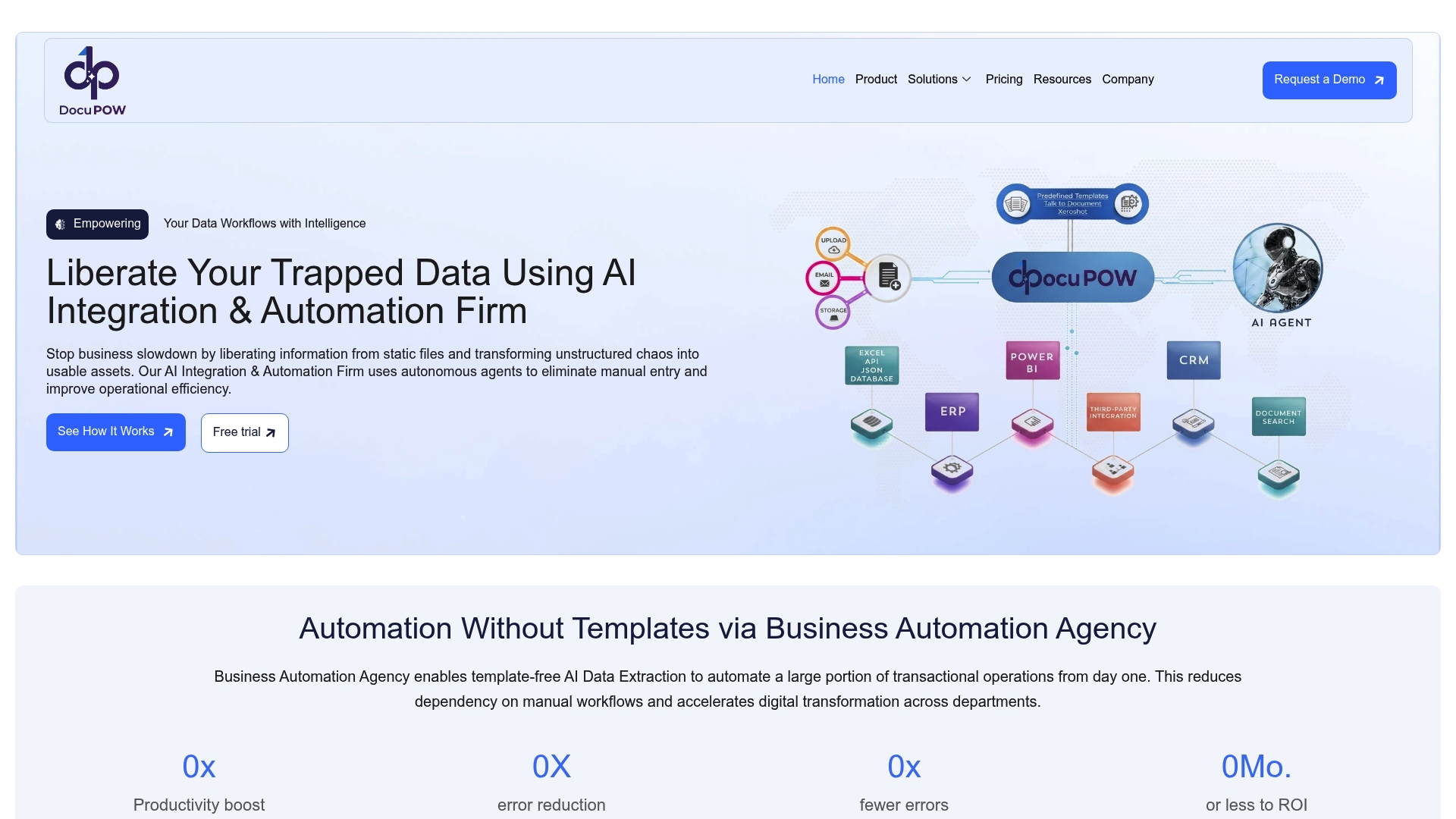
DocuPOW extracts cost data directly from invoices, purchase orders, and subcontract documents using AI agents that understand document context without rigid templates. That data feeds directly into your ERP and project management systems, eliminating the manual consolidation step that delays reporting. The result is committed cost visibility that updates as documents are processed, not as accountants find time to enter them. Finance teams working on construction projects and real estate portfolios use DocuPOW to close the gap between field activity and financial reporting without adding headcount.
FAQ
What is job cost reporting?
Job cost reporting is the process of tracking all costs assigned to a specific project or job, including labor, materials, subcontractors, and overhead, and comparing them against the original budget. It gives financial managers real-time visibility into project profitability and cost variances.
How often should job cost reports be generated?
Weekly reporting is the industry standard for well-run organizations. Monthly cycles leave project managers reviewing data that is 2–3 weeks old, which is too late to prevent most cost overruns.
What causes job costing setups to fail?
The most common cause is misalignment between estimator budget categories and accounting cost codes. Without a pre-project alignment meeting, bid-to-actual variance analysis becomes impossible because the two data sets are incompatible.
What is committed cost visibility and why does it matter?
Committed cost visibility means your reporting system shows costs as soon as a purchase order or subcontract is approved, before the invoice arrives. Without it, uninvoiced spend creates hidden financial exposure that does not appear in standard accounts payable reports.
How long does it take to get reliable job cost reports after implementation?
Reliable reports typically require 30–60 days of calibration after implementation. Use that period to validate cost code mappings, correct entry errors, and train the team before making major financial decisions based on the output.
Recommended
See DocuPOW on your documents.
Stop building templates. Start extracting data.