Meet §371.3: Template Free Rate Confirmation Automation for Brokers
Playbook for freight brokers to deploy template free rate confirmation automation, meet §371.3 record rules, and run a 4–8 week pilot.


Rate confirmation automation turns inbound rate offers and carrier documents into verified, auditable load confirmations without manual data entry. It fits brokerages handling repeatable lanes with high email or EDI volume, where speed to confirm and a clean audit trail matter more than one-off customization. This guide covers the workflow, the regulatory backdrop, and a pilot structure for testing it in your operation.
TL;DR:
- Automated rate confirmation systems quickly ingest and validate load details from multiple formats, reducing manual entry and minimizing errors.
- Pilot programs lasting 4 to 8 weeks focus on routine lanes, ensuring reliable extraction and threshold tuning before full deployment.
- Template-free extraction and human-in-the-loop review are key to adapting to carrier format changes without extensive setup.
- Automation primarily boosts capacity for growth by reallocating staff to carrier management rather than reducing headcount.
- Maintaining an audit trail and electronic records enables brokers to meet regulatory requirements and respond to transaction inquiries rapidly.
Table of Contents
- What rate confirmation automation actually does
- Benefits and ROI for brokerages and operations teams
- Core features and technical components to require
- Implementation checklist: how to pilot and deploy rate confirmation automation
- Real pilot evidence from agentic, template-free extraction
- When automation isn’t the right move
- How we approach rate confirmation automation at DocuPOW
- FAQ
- Sources
What rate confirmation automation actually does
A rate confirmation, or RateCon, is the document that locks in agreed terms between a broker and a carrier: rate, pickup and delivery windows, equipment type, accessorials, and reference numbers tying the load back to the shipper’s order. Getting these fields wrong causes billing disputes and payment delays, which is why accuracy here carries more weight than speed alone.
Automation ingests RateCons from wherever they arrive: email attachments, EDI feeds, PDF uploads, or carrier portal submissions. Once ingested, the system extracts the key fields, checks them against the original rate quote and load tender, and flags mismatches before anything moves forward. Clean records get an automated acknowledgment back to the carrier and a load creation event in your transportation management system.
The core sequence looks like this:
- Ingest the document regardless of channel or format.
- Extract rate, dates, equipment, and reference fields.
- Validate extracted data against the original quote or tender.
- Trigger an acknowledgment and hand off to TMS and accounts payable.
Each step produces a timestamped record, which becomes relevant later when we discuss recordkeeping obligations.
Benefits and ROI for brokerages and operations teams
The business case rests on three things: speed, accuracy, and headcount leverage. Manual rate confirmation work ties up coordinators who could be managing carrier relationships or chasing exceptions instead. Automating the repeatable parts shifts that balance.
Automation tends to increase capacity for growth rather than simply cutting headcount, according to industry analysis from Transport Topics, which found that brokerages redeploy time saved toward carrier relationship management and exception handling instead of reducing staff. That reframes the ROI conversation: the win isn’t fewer people, its more volume handled by the same team.
Other operational gains worth tracking:
- Faster time-to-confirm shortens the gap between tender and dispatch.
- Fewer manual-entry errors mean fewer billing disputes downstream.
- Consistent validation rules catch rate mismatches before they become disputes.
- A unified audit trail replaces scattered email threads and spreadsheets.
There’s also a regulatory angle. Brokers who keep clean, searchable electronic records are better positioned to respond quickly if proposed FMCSA amendments requiring transaction records within 48 hours of a request move forward. Manual, paper-based systems make that turnaround much harder to hit consistently.
Core features and technical components to require
Not every “rate confirmation software” claim holds up under scrutiny. The difference between a system that works on day one and one that needs months of setup usually comes down to how it extracts data.
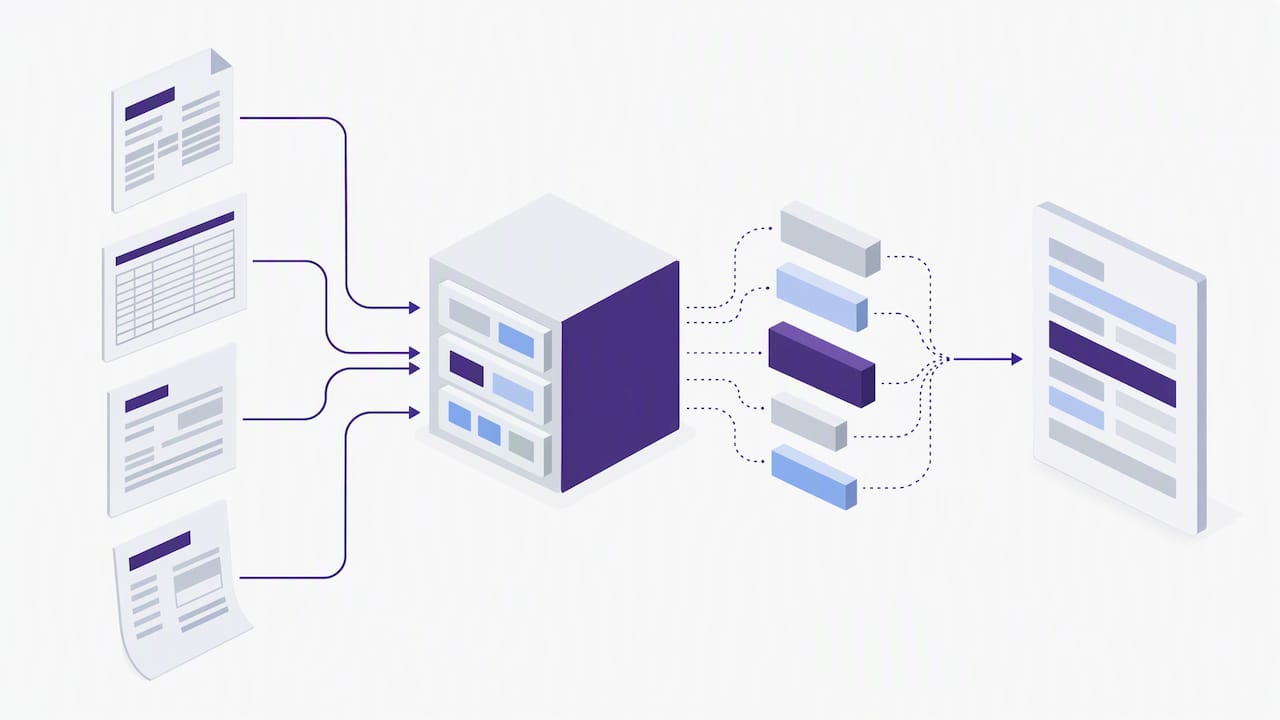
Template-based OCR requires you to build a parsing template for every carrier’s document layout, which breaks the moment a carrier changes their format. Template-free, zero-shot extraction reads fields by context and labeling rather than fixed position, so it adapts to new layouts without rebuilding anything.
When evaluating a system, require these capabilities:
- Template-free extraction that handles format variation without manual template setup.
- Agentic rules for routing exceptions to a human instead of guessing.
- Carrier vetting checks, including authority and insurance credential validity.
- Native integration with your TMS, EDI feeds, load boards, and accounting or AP systems.
- A complete audit log tying every extraction, validation, and acknowledgment to a timestamp.
Pro Tip: Start your auto-accept thresholds conservative; widen them only after a few weeks of clean validation data.
Integrations matter as much as extraction accuracy, as shown by fleet GPS data integration examples for fleet managers. A system that extracts perfectly but can’t hand data to your TMS or AP workflow just creates a second manual step instead of removing the first one.
Implementation checklist: how to pilot and deploy rate confirmation automation
Rolling out rate confirmation automation works best as a scoped pilot before any broader commitment. Here’s the order that avoids the most common missteps:
- Pick repeatable lanes. Choose load types and carrier relationships with consistent volume, not edge cases.
- Scope the pilot to 4 to 8 weeks. This window is long enough to surface format variations without dragging on indefinitely.
- Map input formats. Inventory which RateCons arrive by email, EDI, PDF, or portal, and confirm integration requirements for each.
- Define acceptance rules. Decide what counts as a clean match versus a flagged exception before you start testing.
- Set human-in-the-loop thresholds. Route anything outside your confidence band to a reviewer, not an automatic accept.
- Run integration and reconciliation tests. Confirm data lands correctly in your TMS and reconciles against AP records.
- Track KPIs throughout. Measure time-to-confirm, error rate, and hours saved against your pre-pilot baseline.
| Pilot phase | Typical duration | Primary goal |
|---|---|---|
| Lane and format mapping | Week 1 | Confirm input channels and volume |
| Rule and threshold setup | Weeks 2 to 3 | Define acceptance and escalation rules |
| Live extraction testing | Weeks 3 to 6 | Validate accuracy against baseline |
| Reconciliation and KPI review | Weeks 6 to 8 | Confirm integration and measure results |
A pilot this short works because it forces a narrow scope. Trying to automate every lane and document type at once usually means no single workflow gets properly tuned before leadership asks for results.
Real pilot evidence from agentic, template-free extraction
Pilot engagements for document automation commonly run 4 to 8 weeks, long enough to validate mapping rules across RateCon variations and tune human-in-the-loop thresholds before wider rollout. That timeline matters because it gives a brokerage enough live volume to catch format edge cases without committing to a long contract first.
A few things tend to hold true across these pilots:
- Template-free extraction cuts onboarding time for new carrier formats since there’s no per-carrier template to build first.
- Human-in-the-loop review catches the ambiguous cases that automation alone would misread.
- Autonomous agents that understand document context, not just layout position, adapt faster when a carrier changes how they format a RateCon.
The practical lesson from most pilots: start narrow, tune thresholds early, and widen scope once the exception rate drops.
When automation isn’t the right move
Automation earns its keep on repeatable lanes, not one-off or highly irregular loads where every field needs a judgment call. Keep a human reviewing anything outside your defined rules, and set auto-accept thresholds conservatively at first. The audit trail matters more than the speed: a fast system that quietly accepts bad data costs more than a slightly slower one that flags it.
— Syed Naveed Abbas
How we approach rate confirmation automation at DocuPOW
We built our platform around agentic, template-free extraction specifically because freight documents rarely follow one fixed layout. Our human-in-the-loop auditing catches the edge cases before they become disputes, and our logistics solutions connect directly into the systems brokerages already run.
A 4 to 8 week proof-of-concept is how we test fit: we map your document formats, set validation rules against your lanes, and measure time saved and error reduction before you commit to anything larger.
- Template-free extraction that adapts without manual setup per carrier.
- Human-in-the-loop review built into every workflow, not bolted on after.
- Integration with TMS, EDI, and AP systems commonly used in the industry.
| Plan | Price | Fit |
|---|---|---|
| Starter | See our pricing page for current details | Smaller teams testing automation on a few lanes |
| Professional | See our pricing page for current details | Growing brokerages scaling across more carriers |
| Enterprise | Price available on request | Larger operations needing custom integration scope |
Check our pricing page for plan details, or start with a pilot scoped to your busiest lanes.
FAQ
What is the best CRM for a logistics company?
The right choice depends on your brokerage’s size and existing TMS setup rather than any single universal answer. Most logistics teams prioritize CRMs that integrate directly with their TMS and document automation tools so carrier and shipper data stays in sync without duplicate entry.
What does rate confirmation mean?
A rate confirmation, or RateCon, is the document that finalizes agreed terms between a broker and carrier, including rate, pickup and delivery windows, equipment type, and reference numbers. It serves as the binding record both parties rely on if a billing or scheduling dispute comes up later.
Why do many freight brokers struggle in their first year?
New brokerages often underestimate the operational load of manual rate confirmation, carrier vetting, and recordkeeping on top of sales. Thin margins leave little room for the billing errors and disputes that manual, error-prone workflows tend to produce.
What is logistics automation?
Logistics automation applies software and AI to repeatable freight workflows like rate confirmation, carrier vetting, and document processing, replacing manual data entry with extraction and validation rules. It typically covers ingestion, verification, and handoff to systems like a TMS or accounting platform.
Does rate confirmation automation help with regulatory compliance?
Clean, searchable electronic records make it easier to respond to broker transaction record requests under 49 CFR §371.3, which requires brokers to retain records for three years and allow each party to review them. Automated systems that log every extraction and acknowledgment support that requirement more reliably than manual filing.
Sources
- eCFR :: 49 CFR 371.3 – Records to be kept by brokers
- Transparency in property broker transactions — Federal Register
- Drive freight brokerage success: strategy & innovation (whitepaper) — Transport Topics
Recommended
See DocuPOW on your documents.
Stop building templates. Start extracting data.