Cloud Analytics Services: A 2026 Guide for Decision-Makers
Explore Cloud Analytics Services in this 2026 guide. Learn how to enhance decision-making with real-time insights and data governance.

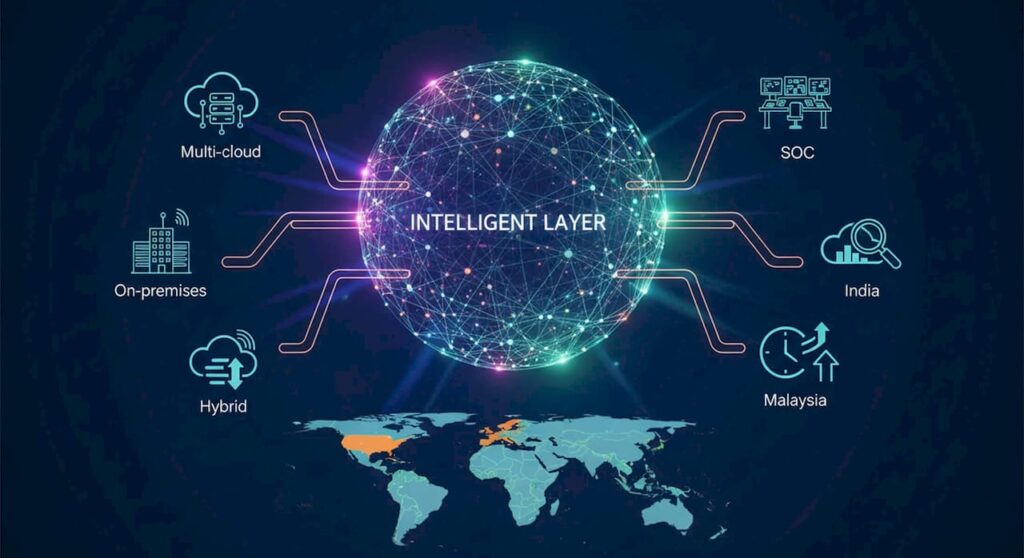
TL;DR:
- Cloud analytics services are cloud-hosted platforms that process data to provide scaled business insights and real-time analysis. Effective deployment depends on robust architecture, semantic layers, data governance, and cost discipline from the start. They are especially valuable for industries with high-volume, time-sensitive data like retail, finance, healthcare, and manufacturing.
Cloud analytics services are defined as cloud-hosted platforms that ingest, store, transform, and serve data to produce business intelligence at scale. The industry term for this discipline is “cloud-based analytics,” though “cloud analytics services” is the phrase most decision-makers search when evaluating vendors and architectures. Organizations that adopt these platforms replace fixed server infrastructure with consumption-based models, gaining the ability to process fragmented data sources, run AI-driven anomaly detection, and deliver real-time insights across global teams. Data governance frameworks, FinOps cost disciplines, and semantic layers are the three pillars that separate successful deployments from expensive failures.
1. What are the core architectural layers of cloud analytics services?
Modern cloud analytics architectures are built around four core layers: ingestion, storage, transformation, and serving. Each layer has a distinct job, and weakness in any one of them creates downstream problems that no dashboard can fix.

Ingestion is where raw data enters the system. Sources include streaming feeds, API pulls, and scheduled batch imports from ERP systems, CRMs, IoT sensors, and document workflows. The ingestion layer must handle both high-frequency event streams and large periodic file loads without dropping records or introducing latency that distorts time-sensitive analysis.
Storage sits beneath ingestion and holds data in three zones: raw, curated, and aggregated. Raw zones preserve original records with full lineage. Curated zones hold cleaned, validated datasets ready for analysis. Aggregated zones store pre-computed summaries that power fast dashboard queries. Lineage preservation at the storage layer is what makes audit trails and compliance reporting possible.
Transformation converts raw records into analysis-ready datasets. This layer handles schema standardization, field enrichment, deduplication, and data quality checks. Without a disciplined transformation layer, teams end up with five different definitions of “monthly revenue” across five different reports.
Serving is the output layer. It delivers data through dashboards, REST APIs, SQL notebooks, and AI-assisted interfaces. The serving layer is where business teams actually interact with data, so its design determines whether analysts can self-serve or must queue requests with engineering.
| Layer | Primary Function | Common Tools and Patterns |
|---|---|---|
| Ingestion | Collect data from all sources | Streaming, batch imports, API connectors |
| Storage | Preserve raw and curated data | Data lakes, warehouses, lineage tracking |
| Transformation | Clean, enrich, and standardize | ETL pipelines, schema validation, quality checks |
| Serving | Deliver insights to end users | Dashboards, APIs, AI interfaces, notebooks |
2. What key features distinguish effective cloud analytics services in 2026?
The most common failure in cloud analytics is lifting legacy BI tools to the cloud without changing the underlying architecture. Inconsistent metrics and conflicting dashboards result when teams skip the semantic layer. A semantic layer creates a single, governed definition for every business metric, so “conversion rate” means the same thing in the marketing dashboard as it does in the finance report.
Governed self-service is the feature that makes a semantic layer operational. It lets analysts query data independently without breaking shared metric definitions. Without it, every new report risks introducing a new version of the truth.
Integrated FinOps is the second non-negotiable feature. Cost monitoring must be integrated from the start, with workloads tagged by environment, team, and business owner. Without tagging, spend reports show total cloud costs but cannot tell you which team or product line generated them. That makes cost control impossible.
AI capabilities now include anomaly detection, causal analysis, and plain-English explanations of business impacts. Cloud analytics platforms enable AI-driven insights that translate raw signals into decisions without requiring a data scientist to interpret every alert. This is the feature that moves analytics from reporting to decision support.
Data classification supports compliance and privacy requirements by tagging fields as public, internal, confidential, regulated, or restricted. Data classification models tie access rules directly to sensitivity labels, so regulated fields are automatically protected without manual policy enforcement.
Pro Tip: Build your semantic layer before you build your first dashboard. Retrofitting metric definitions after teams have already built reports on inconsistent data takes three times as long and creates organizational friction that slows adoption.
3. What are the common challenges when deploying cloud analytics services?
Deployment challenges in cloud data analysis services cluster around four recurring problems: data quality, integration complexity, compliance gaps, and processing architecture mismatches.
Data quality and lineage management are the most common sources of project failure. When source systems use inconsistent formats, missing values, or duplicate records, the transformation layer cannot produce reliable outputs. The fix is to define quality rules at ingestion, not transformation, so bad data is flagged before it enters the storage layer.
Security and compliance governance must be designed into the architecture from day one. Data governance is essential to manage privacy, reduce risk, and meet regulatory requirements. Organizations that treat governance as a post-launch task consistently face audit failures and data breach exposure.
Streaming versus batch processing creates stability problems when teams try to synchronize everything in real time. Synchronous processing of all data streams is a recognized pitfall. Best practice reserves synchronous pipelines for user-critical paths and uses asynchronous pipelines for the majority of data movement. This prevents cascading failures during peak load.
Data ownership gaps produce the same result as governance gaps: no one is accountable when a metric is wrong. Assigning clear owners to each data domain, and encoding those owners in the semantic layer, is the operational fix. AI workflow governance follows the same principle: ownership must be explicit before automation can be trusted.
Pro Tip: Run a data lineage audit before you migrate any existing reports to a new cloud analytics platform. Knowing where each field originates, and how it has been transformed, prevents you from inheriting legacy data quality problems in your new architecture.
4. Which industries benefit most from cloud analytics services?
The primary value of cloud analytics has shifted toward domain intelligence: automated, contextualized insights that translate raw data into business decisions. This shift benefits specific industries more than others because their operations generate high-volume, time-sensitive data that manual analysis cannot keep pace with.
Retail and logistics use real-time operational intelligence to monitor inventory levels, detect supply chain disruptions, and adjust pricing within minutes of a demand signal. A retailer processing point-of-sale data across thousands of locations needs a cloud analytics platform that can ingest, transform, and serve insights faster than a nightly batch job allows.
Finance and marketing benefit from AI-assisted domain intelligence. Fraud detection, customer lifetime value modeling, and campaign attribution all require the kind of causal analysis that modern cloud platforms now deliver through automated investigation pipelines. These teams no longer need to wait for a data scientist to build a custom model for each question.
Regulated industries including healthcare and financial services use cloud analytics for compliance-driven reporting. Data classification and governance are the features that make cloud analytics viable in these sectors. Platforms that cannot enforce field-level access controls and audit trails cannot meet HIPAA, SOX, or GDPR requirements.
Manufacturing and construction use cloud analytics to integrate fragmented document workflows with operational data. When purchase orders, invoices, and delivery records live in separate systems, cloud analytics platforms that connect those sources give operations teams a single view of project cost and progress.
5. How to evaluate and choose the best cloud analytics services for your organization
The evaluation criteria that matter most are architectural fit, governance support, cost model transparency, and AI capability depth. Generic feature checklists miss the decisions that actually determine whether a platform succeeds at scale.
Architectural fit means the platform must match your existing data sources and scale requirements. An organization running high-volume document workflows needs a platform with strong batch ingestion and lineage tracking. An organization running real-time operations needs low-latency streaming pipelines. Most enterprises need both, which is why hybrid architectural approaches that balance asynchronous bulk processing with synchronous critical paths are the most practical choice.
Governance support is the criterion most teams underweight during evaluation. A platform that cannot enforce a semantic layer, assign data ownership, or classify fields by sensitivity will create governance debt that compounds over time. Evaluate governance features as rigorously as you evaluate query performance.
Cost model transparency separates platforms that align spend with business value from those that generate surprise invoices. Pay-as-you-go pricing models replace fixed hardware costs with consumption-based operational spend. That flexibility is only useful if the platform provides workload-level cost attribution so you can see exactly what each team or product is spending.
AI capability depth determines whether the platform delivers domain intelligence or just faster reporting. Evaluate whether the AI layer can detect anomalies, explain causality in plain language, and trigger automated investigations. Platforms that offer only visualization with a machine learning add-on are not the same as platforms with native AI-powered insight generation.
Pro Tip: Request a cost attribution demo before signing any contract. Ask the vendor to show you how workload tagging works and what a monthly FinOps report looks like. If they cannot show you field-level cost breakdowns, the platform will not support real cost discipline.
| Evaluation Criterion | What to Look For |
|---|---|
| Architectural fit | Supports both streaming and batch; matches your data source types |
| Governance support | Semantic layer, data ownership assignment, field-level classification |
| Cost model transparency | Workload tagging, consumption-based billing, FinOps reporting |
| AI capability depth | Native anomaly detection, causal analysis, plain-language explanations |
| Integration flexibility | API connectors, document workflow support, enterprise system compatibility |
Key Takeaways
Successful cloud analytics adoption requires a governed, four-layer architecture with FinOps cost discipline and a semantic layer embedded from day one, not added after the first dashboard goes live.
| Point | Details |
|---|---|
| Architecture is the foundation | Build ingestion, storage, transformation, and serving layers before adding AI or dashboards. |
| Semantic layers prevent metric chaos | Define every business metric once, centrally, to stop conflicting reports across teams. |
| FinOps must start at launch | Tag workloads by owner and environment from day one to align cloud spend with business value. |
| Governance is not optional | Data classification and ownership assignment protect compliance and build organizational trust in data. |
| AI delivers domain intelligence | Use platforms with native anomaly detection and causal analysis to move from reporting to decisions. |
Why most cloud analytics projects fail before they scale
I have watched organizations invest heavily in cloud analytics platforms and still end up with the same problem they started with: nobody trusts the numbers. The root cause is almost always the same. Teams migrate their existing reports to a new cloud environment and call it modernization. They do not rebuild the architecture. They do not install a semantic layer. They do not assign data owners. They just move the mess to a faster server.
Effective cloud analytics modernization is architectural, not just a tooling swap. The organizations that get this right treat the semantic layer and FinOps discipline as infrastructure, not features. They define metric ownership before they write the first query. They tag every workload before they run the first pipeline. That discipline feels slow at the start. It pays back in months, not years, because teams stop arguing about which dashboard is correct and start making decisions.
The other pattern I see consistently is teams underestimating the cost of streaming everything in real time. Real-time data is genuinely valuable for operational decisions. But synchronizing every data source in real time is expensive and fragile. The teams that build the most reliable platforms use asynchronous pipelines for the majority of their data and reserve synchronous processing for the paths where latency actually changes a business outcome. That distinction, made early, saves significant infrastructure cost and prevents the cascading failures that kill confidence in a new platform.
My honest recommendation: treat your first 90 days on a new cloud analytics platform as an architecture sprint, not a reporting sprint. Get the governance, ownership, and cost tagging right before you build a single dashboard for a business stakeholder.
— Sameer
How DocuPOW connects document intelligence to cloud analytics
Organizations running cloud analytics at scale still face one persistent gap: data trapped in documents never reaches the analytics layer. Purchase orders, invoices, contracts, and delivery records sit in static files while the analytics platform waits for structured inputs it never receives.
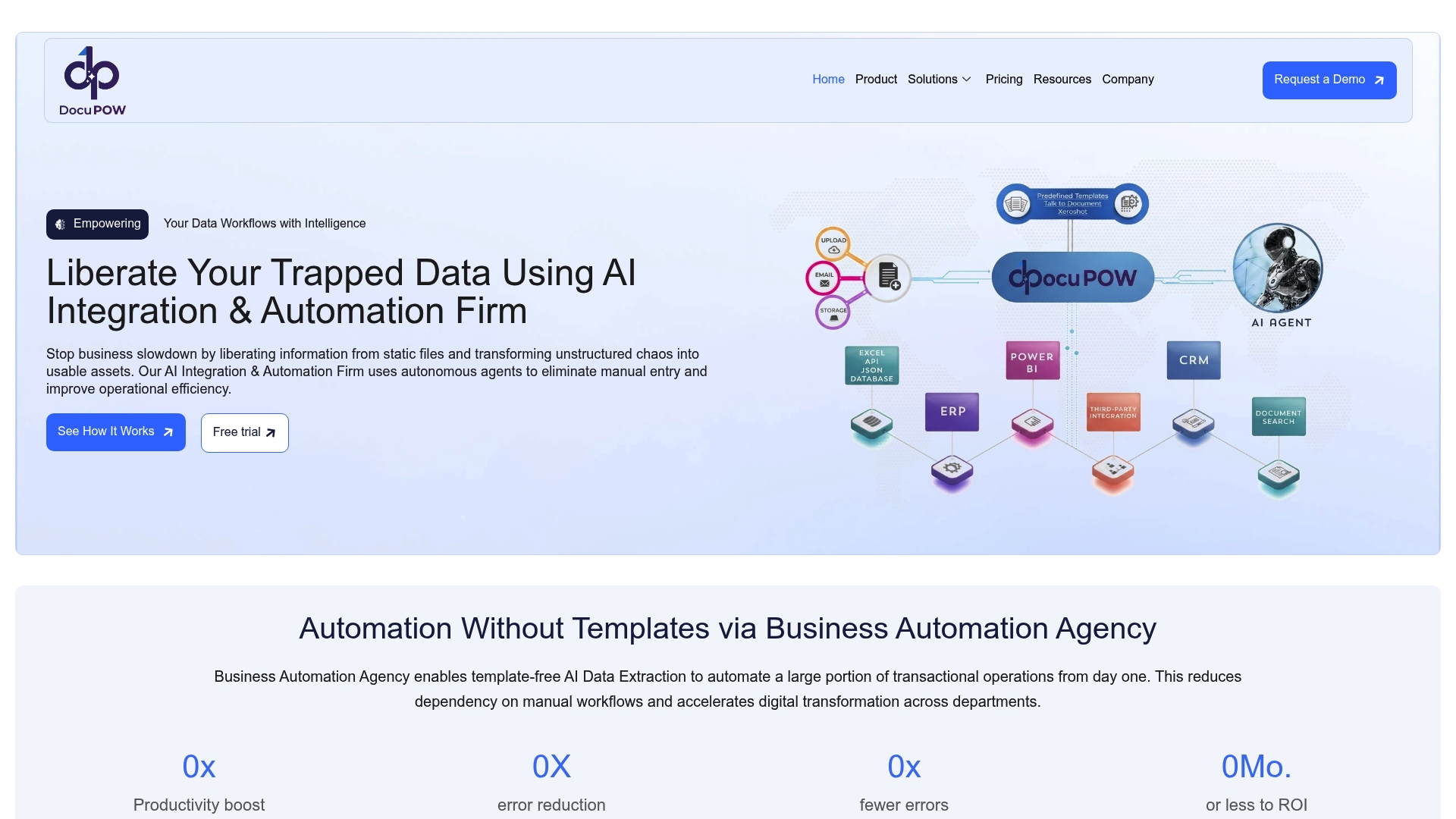
DocuPOW closes that gap with AI-powered autonomous agents that extract, classify, and route document data directly into cloud analytics workflows, without rigid templates or manual entry. For teams in real estate and construction, DocuPOW transforms document-heavy operations into governed, analytics-ready data streams. The result is faster financial visibility and decision-making grounded in complete data. Explore how DocuPOW’s AI workflow automation integrates with your cloud analytics architecture to deliver the domain intelligence your operations need in 2026.
FAQ
What are cloud analytics services?
Cloud analytics services are cloud-hosted platforms that collect, store, process, and deliver data insights at scale. They replace on-premise BI infrastructure with consumption-based models that support real-time analysis, AI-driven insights, and governed self-service.
What is a semantic layer in cloud analytics?
A semantic layer is a centralized definition of every business metric used across an organization’s analytics platform. It prevents conflicting dashboard results by ensuring that every team queries the same definition of each metric.
Why is FinOps important for cloud analytics?
FinOps aligns cloud analytics spend with business value by tagging workloads to specific teams, environments, and products. Without workload tagging, cost reports show total spend but cannot identify which operations are driving it.
How does AI improve cloud analytics for businesses?
AI in cloud analytics detects anomalies, identifies causal relationships, and delivers plain-language explanations of business impacts. This moves analytics from passive reporting to automated decision support without requiring a data scientist for every investigation.
What industries benefit most from cloud-based analytics solutions?
Retail, logistics, finance, healthcare, manufacturing, and construction benefit most. These sectors generate high-volume, time-sensitive data from fragmented sources that cloud analytics platforms can integrate, govern, and analyze faster than manual methods allow.
Recommended
See DocuPOW on your documents.
Stop building templates. Start extracting data.