Architects: Trace Event Driven Document Processing Without Templates
Documentation first playbook for architects to make event driven document processing visible. Learn C4 and event first diagrams, schema registries,...


Architects: Trace Event Driven Document Processing Without Templates
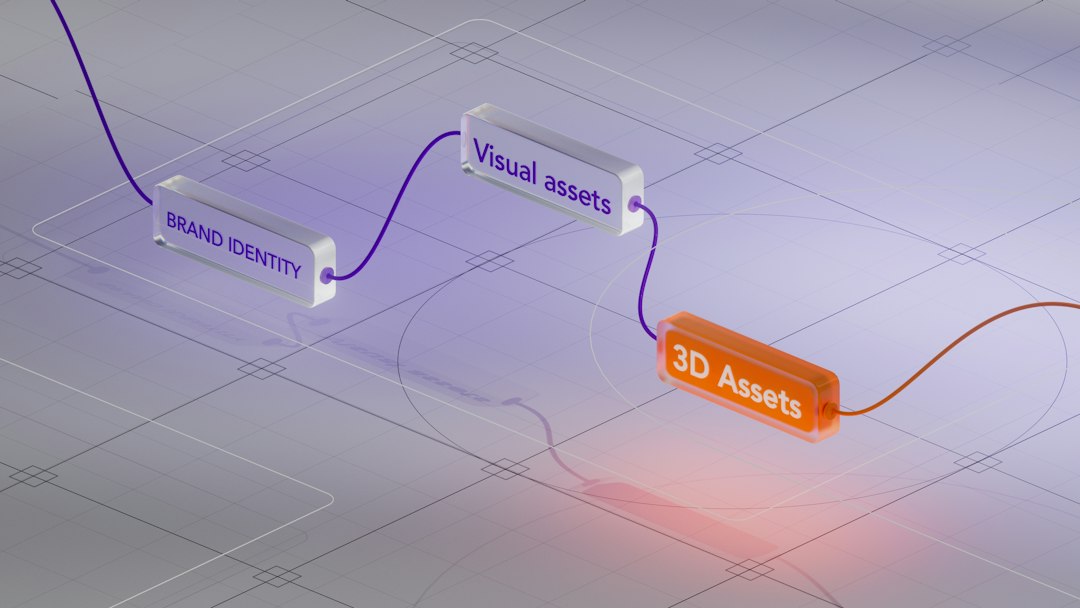
Event-driven document processing triggers extraction, review, and enrichment through asynchronous events rather than direct call, which lets systems scale independently and decouple producers from consumers. The pattern fits workloads with variable volume, multiple downstream consumers, or a need for near-real-time results. The tradeoff is real: you accept eventual consistency and take on the operational burden of schemas, retries, and dead-letter handling.
TL;DR:
Event-driven document pipelines often involve multiple, independent consumers that can change without notification, complicating architecture documentation.
Schema drift and the lack of control flow visibility can lead to silent failures and data inconsistencies across different pipeline stages.
Using explicit, standardized diagrams with topic and schema details helps prevent confusion during incident troubleshooting and ongoing maintenance.
Implementing schema registries, idempotent consumers, and clear dead-letter queue policies reduces the risk of duplicated data and process failures.
Choosing the appropriate architecture—serverless, streaming, or microservices—depends on volume and latency needs, with each requiring thorough documentation.
Table of Contents
-
Why event-driven document pipelines are hard to document and reason about
-
Modeling event-driven document systems with the C4 model and event-first diagrams
-
Documenting common event-driven patterns used in document processing
-
Operational and correctness concerns: schemas, idempotency, state, and failure handling
-
Schema and data-contract guidance specific to document payloads
-
Monitoring, SLAs, and observability for event-driven document workflows
-
An architect’s take on template-free extraction in event flows
Why event-driven document pipelines are hard to document and reason about
A request-response diagram shows who calls whom. An event-driven diagram often shows a producer publishing into a void, because the consumers subscribing to that topic can change without the producer ever knowing. This many-to-many relationship is the first thing that breaks traditional architecture documentation, since a single document-uploaded event might trigger extraction, compliance logging, and billing updates from three teams who never talk to each other.
Four problems recur across most document pipelines:
-
Invisible control flow: nobody can trace a document’s path by reading the producer’s code alone.
-
Schema drift: a field added or renamed by one team can silently break a consumer built months earlier.
-
Eventual consistency: a document can appear “processed” in one view and “pending” in another for seconds or minutes.
-
Failure ambiguity: retries can create duplicates, and out-of-order delivery can corrupt multi-step workflows.
Event-driven architectures commonly rely on intermediate layers like Amazon SQS, Amazon Kinesis, or Azure Event Hubs to decouple producers from consumers, and that decoupling is exactly what makes the system harder to trace without deliberate documentation.
Modeling event-driven document systems with the C4 model and event-first diagrams
Standard C4 diagrams assume synchronous calls between boxes. For document pipelines, you need to adapt each level so brokers, topics, and event contracts stop being implementation details and become diagram citizens in their own right.
-
Treat the broker and its topics as first-class containers on system and container diagrams, not as a generic “messaging” cloud icon.
-
Attach event types, a sample schema snippet, and the current schema version to each component diagram that produces or consumes events.
-
Overlay the document lifecycle (uploaded, extracted, reviewed, published) across the diagram so a reader can trace one document’s journey, not just the static topology.
-
Standardize topic naming (domain.entity.action), document required headers, and label each flow with its delivery semantic: at-most-once, at-least-once, or exactly-once.
A diagram that hides the topic name or the schema version is a diagram that will mislead the next engineer who has to debug a production incident.
Documenting common event-driven patterns used in document processing
Most document pipelines combine a small set of recognizable patterns, and each one needs its own documentation emphasis.
-
Event sourcing: record every state change as an immutable event; document the retention window, the replay procedure, and how consumers rebuild state from the log.
-
CQRS: separate to write path (ingestion and extraction) from read models (search indexes, dashboards); document how and when read models synchronize with the source of truth.
-
Publish/subscribe: fan out a single event, such as document.extracted, to multiple independent consumers; document who owns each subscription and what happens if one falls behind.
-
Streaming versus mediator topologies: a mediator orchestrates steps explicitly, while streaming lets consumers react independently; document which model governs each pipeline stage.
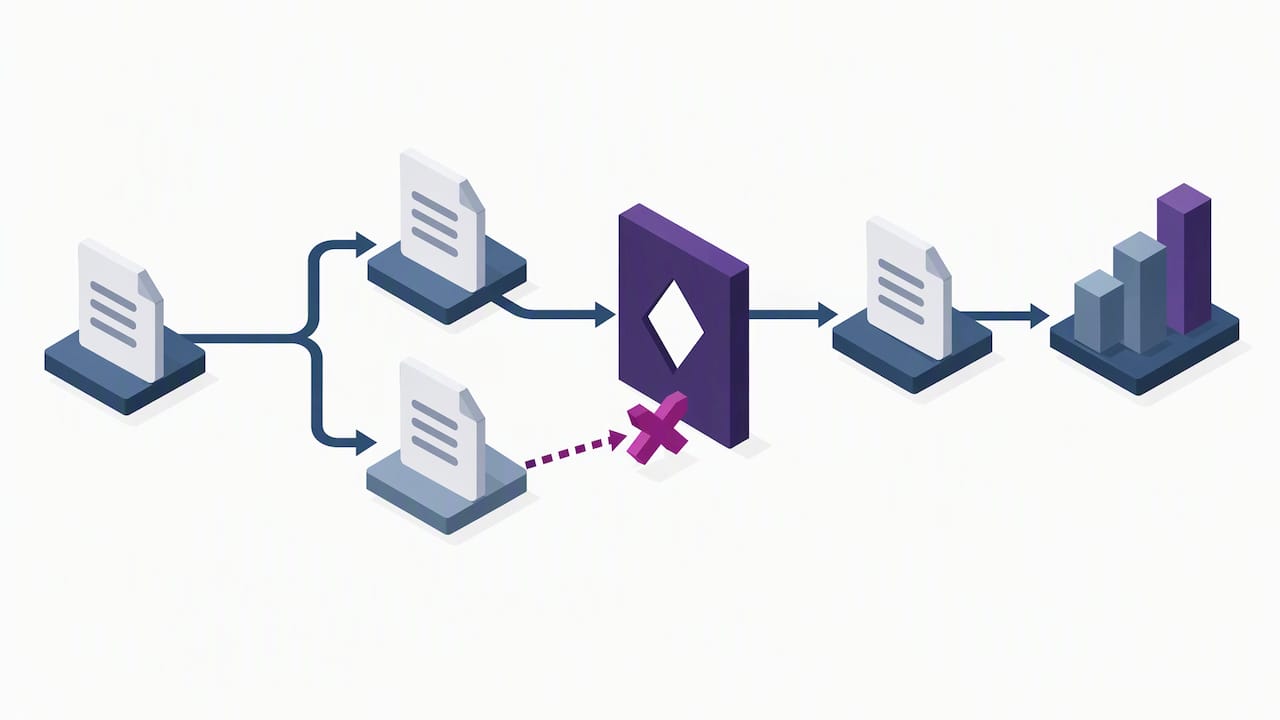
A typical document flow maps cleanly onto these patterns: upload triggers an event-sourced log entry, extraction runs as a pub/sub consumer, review updates a CQRS read model, and publish fans out to downstream sinks.
Operational and correctness concerns: schemas, idempotency, state, and failure handling
The controls that keep a document pipeline correct rarely show up in a high-level diagram, but they belong in every runbook and architecture decision record.
-
Register every event schema in a centralized registry using Avro, Protobuf, or JSON Schema, and enforce backward or forward compatibility checks before deployment.
-
Assign a unique event ID to every message and design consumers as idempotent readers that detect and skip events they already processed.
-
Decide where workflow state lives: brokers are generally stateless, so multi-step document workflows usually need an external store to track progress between upload, extraction, review, and publish.
-
Define dead-letter queue policies explicitly: how many redrive attempts are allowed, who gets alerted, and whether a compensating transaction is needed to undo partial work.
Pro Tip: Store processed event IDs with a time-to-live matched to your retry window, so duplicate detection does not grow unbounded.
Skipping idempotency is the single most common cause of corrupted analytics in document pipelines, since a retried extraction event can silently double-count a line item or duplicate a record in a downstream system.
Implementation options and patterns for document pipelines
The right architecture depends on volume, latency requirements, and how much operational overhead your team can absorb.
-
Serverless: a storage event (file uploaded to a bucket) triggers a function that extracts data and writes failures to a dead-letter queue; this fits bursty or moderate document loads where you want minimal infrastructure to manage.
-
Streaming: a platform like Kafka or Azure Event Hubs paired with a schema registry supports high-throughput, replayable processing when multiple consumers need the same event stream.
-
Containerized microservices: a Kubernetes deployment with dedicated consumer groups per service fits complex, multi-stage processing that needs independent autoscaling for extraction, review, and publishing stages.
-
Integration points: document where AI extraction engines plug into the flow, where a human-in-the-loop review step pauses the pipeline, and which downstream sinks (ERP, CRM, data warehouse) receive the final event.
Each option needs a one-page record of why it was chosen, since teams rebuilding this decision from scratch during an incident waste hour that a short document would have saved.
Schema and data-contract guidance specific to document payloads
Document events carry a particular risk: the temptation to stuff full file content into the payload instead of a pointer. Keep the event itself lean.
-
Separate metadata (document type, timestamp, source system) from content pointers (a storage URL or object key) rather than embedding raw document bytes.
-
Include provenance and audit headers, such as the originating system and processing version, so any consumer can trace an event back to its source.
-
Choose a compatibility mode deliberately: backward compatibility lets new consumers read old events, forward compatibility lets old consumers survive schema changes.
-
Apply field-level redaction for personally identifiable information before publishing, and encrypt payloads in transit; for broader guidance on secure handling, see this overview of secure document sharing.
Confluent’s event design guidance treats schemas as contracts, not documentation, meaning a schema registry enforces compatibility automatically rather than relying on a wiki page nobody reads.
Monitoring, SLAs, and observability for event-driven document workflows
A document pipeline without observability is a black box that fails quietly until a customer complains. The following signals belong in every runbook.
-
Track consumer lag, offset position, throughput, DLQ message counts, and retry rates for every topic in the pipeline.
-
Attach a correlation ID to each document at ingestion and propagate it through every event so you can trace a single file’s full lifecycle across services.
-
Set an explicit end-to-end latency target for the pipeline (upload to published result) and define what happens when that target is missed.
-
Write runbook steps for the three most common incidents: triaging a growing backlog, replaying a range of events, and remediating messages stuck in the dead-letter queue.
Pro Tip: Alert on DLQ growth rate, not just absolute count, so a slow leak gets caught before it becomes a backlog crisis.
Our own guidance on high-volume document processing covers how these metrics translate into practical SLA targets for larger pipelines.
An architect’s take on template-free extraction in event flows
Most event-driven document pipelines assume a rigid schema at the extraction boundary, which means every new document layout becomes a maintenance ticket. Our extraction engine works without fixed templates, so an unseen invoice or contract layout does not require a new mapping before it can enter the event stream. That reduces coupling for every consumer downstream of extraction, since the published event contract stays stable even as source document formats change.
Human-in-the-loop review fits naturally as a documented handoff point in the event flow: a low-confidence extraction event routes to a review queue, and the reviewed result republishes as a new, versioned event. Real-time analytics and predictive insights then double as observability signals, surfacing drift in extraction confidence before it shows up as a downstream data quality incident.
— Syed Naveed Abbas
Putting these controls into practice with DocuPOW
Every control covered here, schema stability, human review checkpoints, and observability into pipeline health, maps directly to how our platform operates. Our agentic extraction engine adapts to new document layouts without template rebuilds, our human-in-the-loop audit step gives you a documented review checkpoint, and our real-time analytics give you the visibility an event-driven pipeline otherwise hides.
-
Template-free extraction keeps your event contracts stable even as source documents vary.
-
Human-in-the-loop review gives you an auditable checkpoint inside the event flow.
-
Real-time analytics surface pipeline health without extra instrumentation work.
If you are evaluating platforms to run this kind of pipeline, compare plans and pricing on our pricing page and see which tier fits your document volume.
FAQ
What is event-driven processing?
Event-driven processing is an architectural style where services communicate by publishing and consuming asynchronous events instead of calling each other directly. AWS describes this model as relying on intermediate layers, such as queues or streams, to decouple producers from consumers.
Can you give me an example of event-driven programming?
A common example is a document-uploaded event: when a file lands in storage, that action publishes an event that triggers an extraction function, independent of whether any other service is listening. Additional consumers, like a compliance logger or a billing updater, can subscribe to the same event without the uploading service knowing they exist.
Is Kafka an event-driven system?
Kafka is a streaming platform commonly used to build event-driven systems, since it lets producers publish events to topics that multiple independent consumers read. Kafka’s delivery semantics (at-most-once, at-least-once, exactly-once) are a core design choice architects must document when using it.
Is EDA suitable for microservices?
Event-driven architecture is a natural fit for microservices because it lets services evolve and scale independently without direct dependencies on each other’s APIs. Microsoft’s guidance on integration events recommends eventual-consistency patterns over distributed transactions for this reason.
How do dead-letter queues fit into document processing?
A dead-letter queue captures events that fail processing after repeated retries, so a malformed or unprocessable document does not get lost or silently dropped. AWS recommends DLQs with automated redrive policies instead of manually tracing failed extraction attempts.
Sources
Recommended
See DocuPOW on your documents.
Stop building templates. Start extracting data.